Festive foliage brings Christmas to the countryside
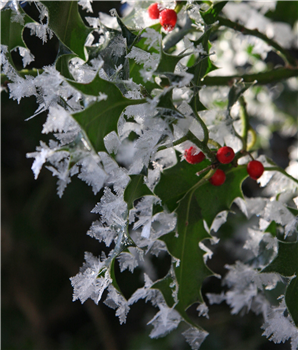
Our Countryside Rangers have a wealth of knowledge on the places, plants and species that call East Lothian home. Ranger Richard English offers an insight into an abundance of festive foliage.
Well, here we are again, rapidly approaching Christmas and all that entails. The festive season has long been associated with various wildlife species; robins, mistletoe, ivy and, perhaps most importantly, holly.
With its dark green, glossy leaves holly is a familiar tree of woodland understorey, hedgerows and gardens. It’s very unusual in that it’s a broad-leaved evergreen and, whilst there are several such species around the world, including oaks, acacias and maples, there are very few that are native to the UK. In fact, I’m struggling to come up with another one… The trees can reach a height of fifteen metres and can, perhaps surprisingly, live for up to three hundred years.
Evergreen
Whilst the leaves have a deserved reputation for spikiness, many hollies also bear non-spiky leaves. The fact that the lower leaves tend to be sharper than those above provides a clue to this variation. The spikes have evolved to discourage grazing animals and, since East Lothian tends not to have too many giraffes, the non-spiky leaves are out of the reach of most herbivores. The leaves’ evergreen status may be linked to the tree’s preference for relatively sheltered habitats. Leaves with large surface areas are thought to make trees more vulnerable to wind damage and can cause branches to become heavy with trapped snow and ice. Growing in the understorey, where the surrounding trees provide some protection against these problems, may allow the holly to retain its leaves all year.
Protecting wildlife
The holly is a dioecious species, meaning that individual plants have either male or female flowers, but not both. Female holly trees will be bearing fruit at this time of year. The berries are technically drupes, also known as ‘stone fruit’. Although toxic to us, the berries are an important source of food for many birds and are often closely guarded, especially by thrushes. Birds also appreciate the dense, protective cover provided by hollies and small mammals may hibernate in the dense leaf litter below the trees.
Holly is also valuable to wildlife over the summer months, with the flowers producing nectar for pollinators and the leaves being a food source for various caterpillars. Perhaps most significant of these, in a local context at least, is the holly blue butterfly, which has firmly established itself in the county in recent years.
Like so much of the symbolism around Christmas, the custom of displaying holly predates Christianity. As well as protecting against witchcraft, evil spirits and goblins (always a worry), it was also a fertility symbol. This was perhaps because of its shiny leaves and bright berries persisting throughout the winter when most other plants look so lifeless. In ancient Roman times it was associated with the festival of Saturnalia. Like so many pagan symbols, holly was absorbed into Christian imagery - the spiny leaves representing the crown of thorns and the berries the blood of Christ.
However you spend the festive period, I hope you enjoy it and wish you health, happiness and plenty of time in nature in 2026.
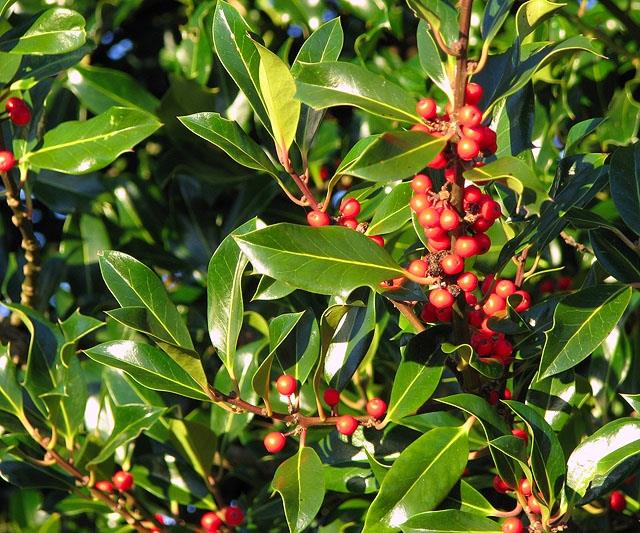 Photo credit: Evelyn Simak
Keep up to date
Keep up to date with all things Countryside Ranger on the service’s facebook or Instagram pages. You’ll find news and information to help you make the most of your time in our coast and countryside spaces as well as beautiful photography of the species that live here.
Facebook: @ELCrangers
Instagram: @elcrangers