A Ranger writes
Our Countryside Rangers have a wealth of knowledge on the places, plants and species that call East Lothian home. Ranger Richard English offers an insight into the grey plover.
Certain types of birds are particularly associated with the winter months. Thrushes such as fieldfare and redwing can turn up in the UK in large numbers, as can waxwings and other cold weather visitors. Wader species are also more commonly seen in East Lothian during the winter, visiting our shores and estuaries from their summer nesting grounds.
The grey plover is one of these species, breeding in the high arctic before heading south to avoid the harsh winters. The birds that we see in Britain will have predominantly bred in Northern Russia. Over 30,000 of these birds will spend the winter here, whilst many more will pass through on migration, heading for Southern Europe and West Africa (well, you would, wouldn’t you, given the chance?). In Scotland, the main wintering sites are the Forth, Eden and Solway estuaries, although this species can be found on shorelines throughout the country.
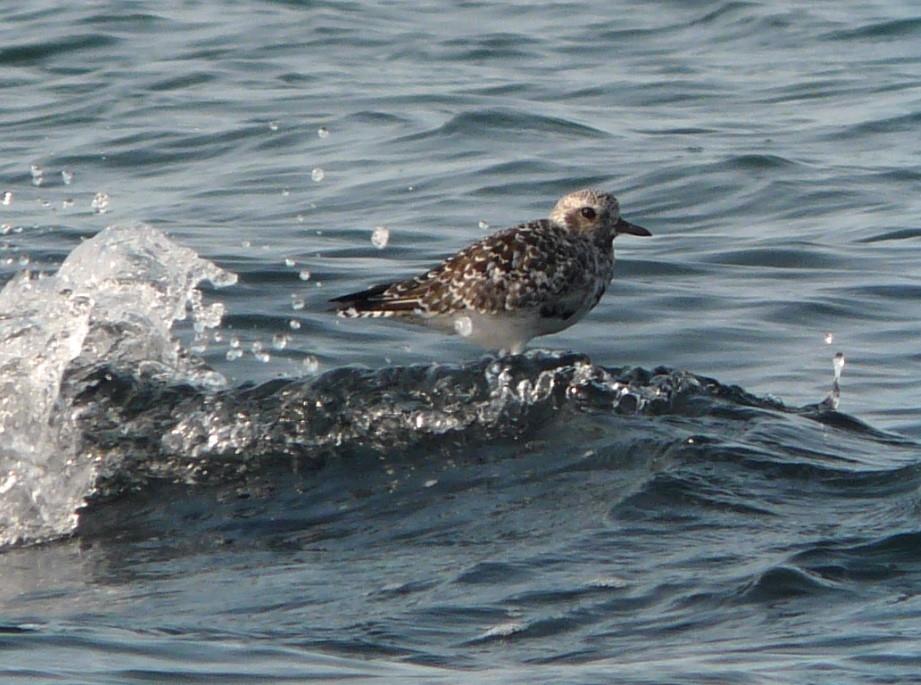 Winter plumage grey plover (credit Abbie Marland)
The grey plover is a medium sized wader, with an overall ‘chunky’ appearance and it has the characteristic short, stubby bill of plovers generally. The species’ seasonal nature means that most of the birds seen in East Lothian will be in their relatively drab winter plumage. This consists of a spotted white and grey-black back, with white underparts. In flight, the black and white barred tail is obvious, as are the distinctive black ‘armpits’ (wingpits?). Sometimes, during migration periods, you might be lucky enough to see a grey plover in breeding plumage, when the black and white speckling takes on a somehow cleaner and more pronounced appearance. In addition, the throat and belly become black, making a very good-looking bird altogether.
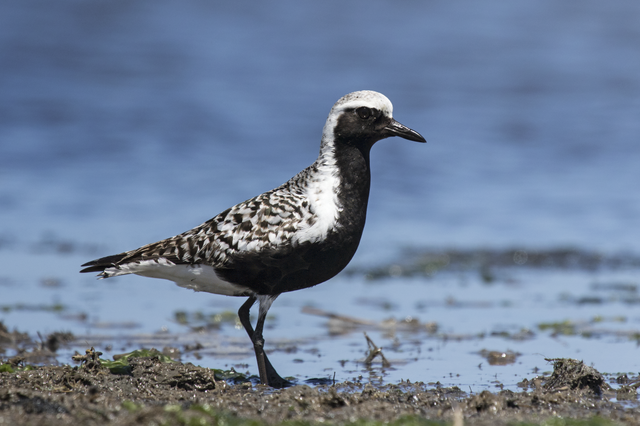 Summer plumage grey plover (credit Chuck Homler / FocusOnWildlife.Me)
It’s in this plumage that the name grey plover really does a disservice. Its closest relative is the golden plover and, with that in mind, then surely this species should be the silver plover? Indeed, in French and Dutch respectively the bird is called Pluvier argenté and Zilverplevier, which seem much more appropriate. These assorted names are all related to the scientific name Pluvialis squatarola. The genus name Pluvialis is derived from Latin and means ‘rain-related’. It reflects a belief that plovers will flock when rain is imminent. The specific squatarola may be from a Venetian word for a plover or may mean ‘black-bellied’. Incidentally, in North America this species is known as the black-bellied plover.
Grey plover can be found feeding in muddy estuaries and shorelines, when the tide is out. Their short bills mean that they tend to take food at or near the surface, preferring small molluscs, worms and crustaceans. They have a characteristically jerky stop-run-peck feeding action. At high tide, grey plover will be found roosting on quiet sandy or rocky shorelines alongside other waders such as golden plover, redshank and godwits. They are less social than other wader species and are therefore often seen in smaller numbers.
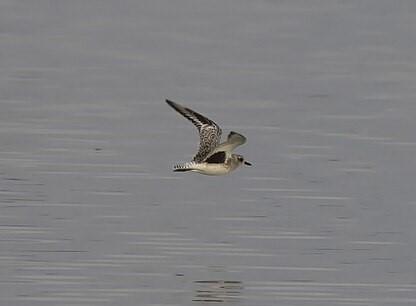 Grey Plover (credit Z Cebeci, Wikimedia Commons)
So, the grey plover may not be the most spectacular bird out there, particularly in winter, but it’s very definitely one to look out for along a windswept February shoreline.
Keep up to date
Keep up to date with all things Countryside Ranger on the service’s Facebook or Instagram pages. You’ll find news and information to help you make the most of your time in our coast and countryside spaces as well as beautiful photography of the species that live here.
Facebook: @ELCrangers
Instagram: @elcrangers