Plague document from our archives on display in St Andrews this summer
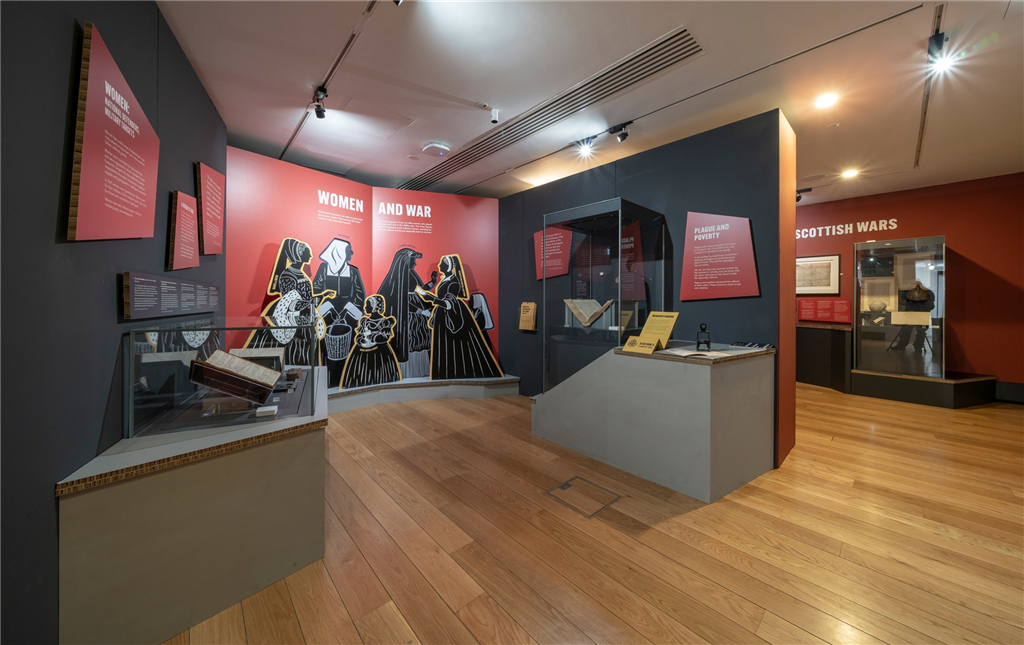
A 16th-century Haddington minute book from our archives is on display in St Andrews this summer. The volume is part of War, Destruction and Reform: The Early Years of Mary, Queen of Scots, an exhibition at the Wardlaw Museum.
In December 1542, Mary became Queen of Scots when she was just six days old. For the next eight years, Scotland was affected by violent warfare with England over her future marriage. The exhibition is not just about Mary, but also the impact of the wars on ordinary people.
East Lothian was at the centre of the conflict. In 1547, the Scottish army was defeated at the Battle of Pinkie, the last pitched battle between Scotland and England. After the defeat, the English army laid siege to Haddington. The siege lasted until 1549 and left the town devastated. Buildings were destroyed or badly damaged, and townspeople suffered from famine and disease.
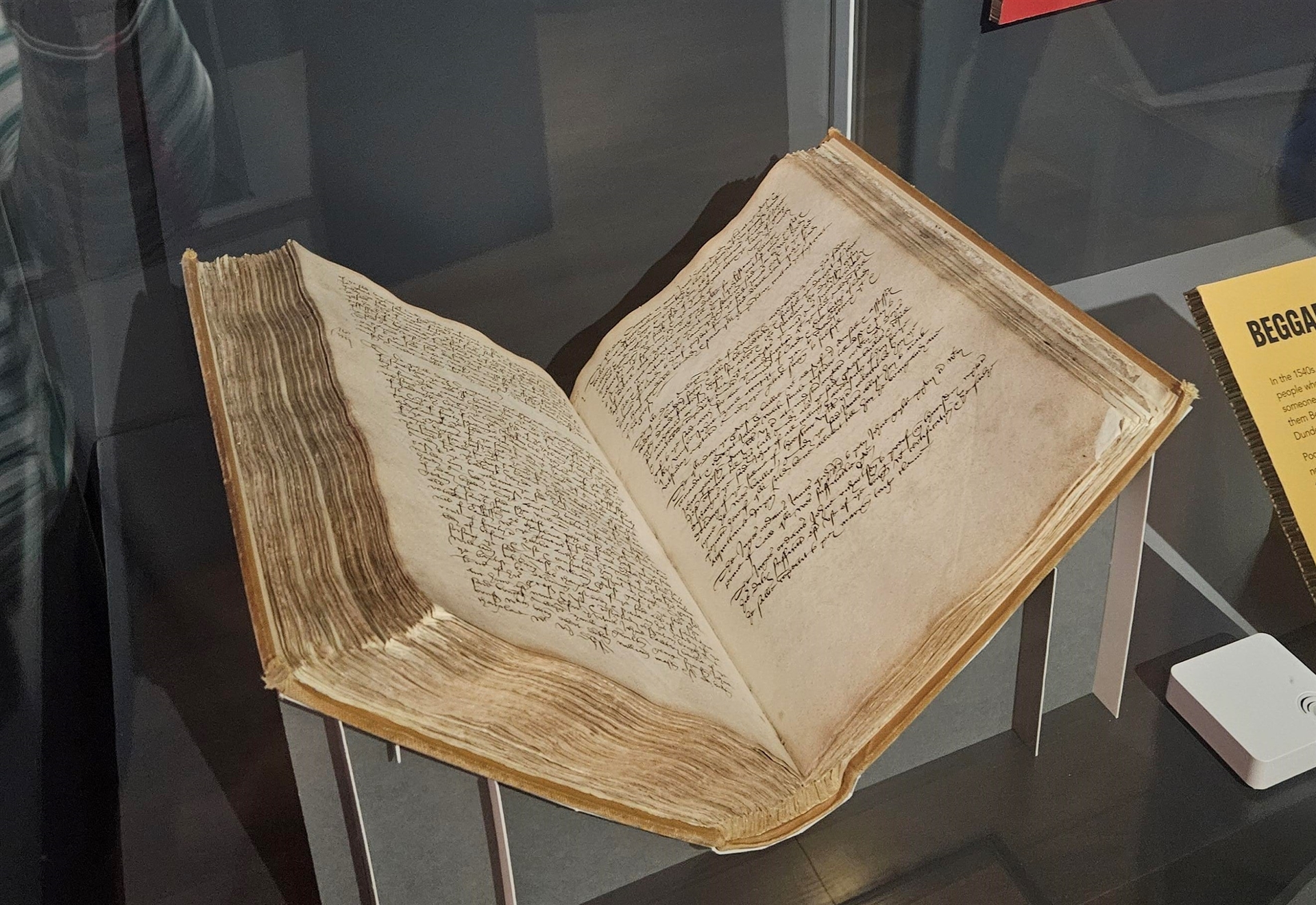
The minute book on display records measures taken to try to stop the spread of plague. These included restricting movement, keeping strangers out and requiring residents to stay at home. There was also a ban on keeping pigs. As pigs scavenged in the streets and consumed waste, people believed they spread the plague.
Although these measures were well intentioned, they were ineffective against a disease spread by fleas living on rats. The council appointed officers to go around every morning and ask, “Who is seik and who is deid?” Those who were ill were banished to the moor at Gladsmuir. Bakers and brewers were instructed to make bread and ale for the “poor wretches” on the moor, but it is unlikely that many survived.
The exhibition is at the Wardlaw Museum until Sunday 20 September. If you would like to find out more about records held in our archives at the John Gray Centre, email history@eastlothian.gov.uk. The Archives Team would be delighted to show you around or arrange a treasures tour for your team.