A Ranger writes
Our Countryside Rangers have a wealth of knowledge on the places, plants and species that call East Lothian home. In this issue, Ranger Richard English tells us about toothwort.
It’s March and spring is officially here! Birds are singing, all sorts of beasties are getting amorous and the hardier of our wildflowers are starting to risk braving the elements.
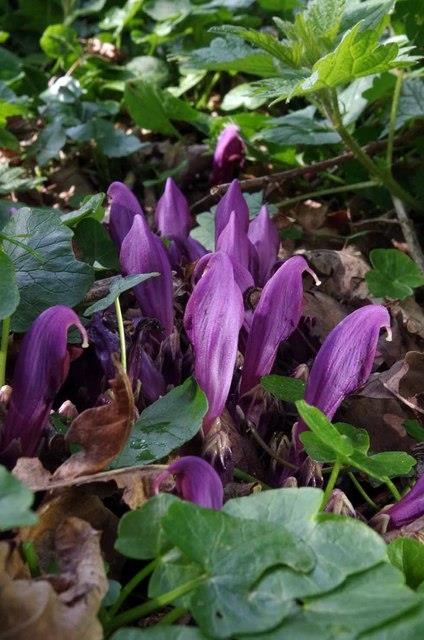 Purple toothwort Credit: Glyn Baker
One floral species worth looking out for, particularly later in the month, is purple toothwort. This is a strange little plant, with hooded, lilac flowers and no green leaves at all. This lack of greenery hints at a further feature of this species’ lifestyle. It has no chlorophyll and therefore doesn’t photosynthesise – relying instead on parasitising other plants, particularly willow and poplars. It conducts this process by means of underground structures called haustoria. These are like roots or suckers, which can grow around and into other plants and absorb nutrients from them – all very vampiric. The flowers are pollinated by bumblebees and, in late summer, develop into explosive seed pods.
Purple toothwort is a non-native species having been introduced from Europe in the late 1800s. Fortunately, it’s not particularly invasive, so it doesn’t attract the same ire that some non-natives do. As a result, it’s not particularly easy to find, a fact not helped by its habit of lurking in shady undergrowth. This shy, retiring nature is reflected in the species’ scientific name, Lathraea clandestina. Lathraea is Greek for hidden, while, hopefully, the meaning of clandestina will be obvious.
There is one native toothwort in the UK, Lathraea squamaria, or just plain toothwort. Like purple toothwort, it’s parasitic on various trees, although it also has a reputation for growing in soil above buried bodies. This may account for its alternative name of corpse flower, although the name may just be from its flesh-coloured flowers (a much less interesting derivation).
Toothwort is even more elusive than its purple relative, although it can be found in East Lothian, hiding away in deciduous woods, hedgerows and on riverbanks. The flowering stems usually appear a little later than those of purple toothwort and consist of spikes of double-lipped pale purple/pink flowers. Bizarrely, this plant is also capable of producing underground flowers which pollinate themselves.
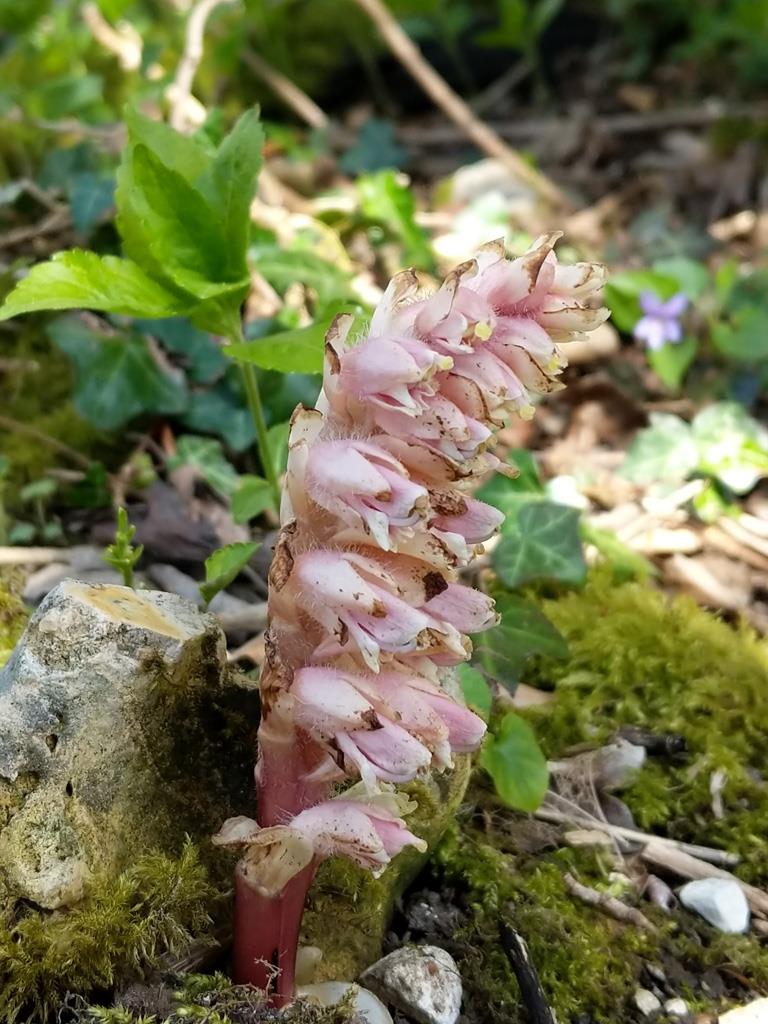 Toothwort Credit: Robin Webster
Both species of are said to derive their names from tooth-like scaly structures on their roots, or in the case of toothwort, from the vaguely toothy appearance of the flowers. However, plant names ending in -wort often denote that the plant was used medicinally and, true to form, toothworts were used to treat toothache. The medical use of purple toothwort is particularly problematic, as it contains several toxic compounds. This may account for the fact that it has also been used as a laxative.
Toothworts are fascinating plants and well worth looking out for. They also have ecological importance beyond providing nectar for pollinators. Purple toothwort has a symbiotic (i.e. mutually beneficial) relationship with several species of fungi which assist the plant in its parasitic ways. Toothwort is less aggressively parasitic than purple toothwort and its host plants seem to derive benefits from its presence. Just one more example, should you need it, of how complex, interconnected and wonderful nature is.
Mud In Your Eye
The latest edition of the Ranger Service newsletter, Mud In Your Eye is available for download here.
Keep up to date
Keep up to date with all things Countryside Ranger on the service’s Facebook or Instagram pages. You’ll find news and information to help you make the most of your time in our coast and countryside spaces as well as beautiful photography of the species that live here.
Facebook: @ELCrangers
Instagram: @elcrangers